
Sicily Wine Guide: Map, Regions & What to Try First
Sicily is three wine countries on one island: Etna, Western Sicily, and Vittoria. A first-timer's map, five producers worth seeking out, and where to start.
Emil Hansen · Founder of Cork
June 13, 2026 · 9 min
Most people taste their first Sicilian wine and assume it'll be a baked, sun-drenched red. Then they meet an Etna Bianco that drinks like top Chablis, or a Carricante from 3,000 feet of volcanic altitude, and the whole map rewires. Sicily isn't one wine country. It's three, stacked on a single island.
This guide is for the reader who knows Sicily makes wine but isn't sure where to start. By the end you'll have a mental map of the three zones, five producers worth seeking out, and a specific bottle to open first.
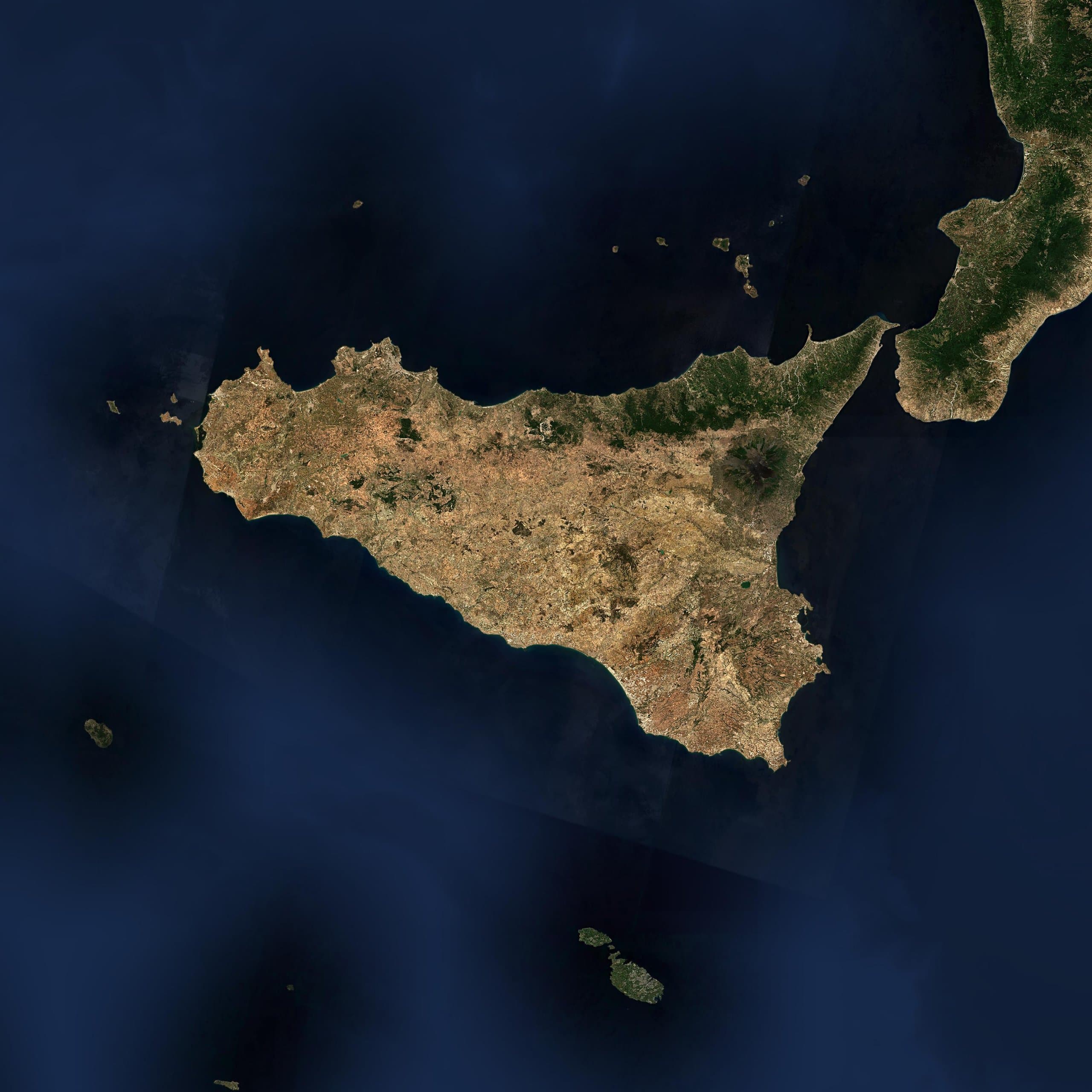
Why Sicily is actually three wine countries
The island is roughly the size of Wales and grows over 100 grape varieties, but the geography splits cleanly into three. The northeast is dominated by Etna, an active volcano whose slopes act as a cool, high-altitude continental climate sitting inside the Mediterranean. The west and interior are warm and classically Mediterranean, with limestone, sandstone, and the long story of Marsala. The southeast, between Vittoria and Noto, is dry, sunny, and red-soiled, the heart of indigenous reds like Frappato and Nero d'Avola.
Treating these as one region is like treating Burgundy and Provence as one region because they're both French. They share a coastline. They don't share a style.
Etna
Etna does not taste like the rest of Sicily. The wines come from volcanic soils on the slopes of an active volcano, often above 600 meters and sometimes pushing 1,000. Diurnal swings are dramatic. The result is wines that read like Burgundy or Northern Rhône far more than the warm-climate Italy people expect.
The signature red is Nerello Mascalese, a thin-skinned grape that gives high acidity, fine tannins, and an aromatic profile that sits somewhere between Pinot Noir and Nebbiolo. The signature white is Carricante, which gives mineral, age-worthy Etna Bianco and can rival the best Chenins for tension when it comes from old vines on the Mongibello plateau.
Drink this if you like Burgundy: a contrada-bottled Etna Rosso from Tenuta delle Terre Nere or Passopisciaro. Single-vineyard Nerello, light in color but seriously structured, often $30 to $60 with real aging potential.
Drink this if you like Chablis: Pietradolce or Benanti Etna Bianco Superiore. Stony, lemon-bitter, faintly saline, and capable of ten years in the cellar.
Western Sicily (Marsala, Menfi, the interior)
The west is the Sicily that fed Italy's bulk wine industry for most of the 20th century. The story has flipped. Today some of the most interesting producers in Italy are quietly fixing a region that was almost destroyed by oxidized supermarket Marsala.
The grapes here are Grillo and Catarratto for whites, Nero d'Avola for reds. Grillo is the surprise. In careful hands it makes a textured, sun-drenched dry white that punches well above its reputation. Nero d'Avola from Menfi or Noto, made without oak excess, is one of the great Mediterranean reds at the price.
Then there's Marsala itself. Real Marsala, made the traditional perpetuum way, has almost nothing to do with what you cook with. Marco De Bartoli's Vecchio Samperi is the canonical example, an unfortified perpetuum closer to a fino Sherry than anything sold under the Marsala DOC.
Drink this if you're skeptical Sicily can do whites: Marco De Bartoli's Grappoli del Grillo. Concentrated, salty, and the bottle that converts most doubters.
Drink this if you want a classic Mediterranean red: Planeta La Segreta Rosso or Donnafugata Sedàra. Both widely available, both deliver Nero d'Avola at its honest mid-range best.
Vittoria and the Southeast
This is the warmest, sunniest part of Sicily, and it produces what is arguably the most distinctive Sicilian wine: Cerasuolo di Vittoria DOCG. The blend is mandated, 50 to 70% Nero d'Avola plus 30 to 50% Frappato. Frappato is the secret. It's light, perfumed, almost rose-scented, and it lifts the Nero d'Avola into something balanced and elegant rather than heavy.
Cerasuolo di Vittoria is the only DOCG in Sicily. That matters less for the label and more because the region's best producers have been quietly making world-class wine here for decades, mostly without the prices catching up.
The neighboring zones, Noto and Eloro, focus on pure Nero d'Avola. From a producer like Gulfi or COS, this is Nero d'Avola made the right way: medium-bodied, structured, the Sicilian sun in the fruit but the freshness preserved.
Drink this if you like Beaujolais: Arianna Occhipinti's SP68 Rosso. Pure Frappato and Nero d'Avola, minimal intervention. Bright, juicy, and one of the most fun reds in Italy.
Drink this if you like serious reds: COS Pithos Rosso. Cerasuolo di Vittoria aged in terracotta amphora, the way wine was made before stainless steel arrived. Few bottles in Italy taste this much like a place.
Explore Sicily's full region guide on Cork
Maps for every sub-zone, profiles for Nerello Mascalese, Frappato, Nero d'Avola, Grillo, and Carricante, plus vintage ratings going back two decades. Built to use alongside a glass.
5 Sicilian producers to try first
These five span the three zones, are findable in serious wine shops in most markets, and each represent the best version of what their region does. Listed in the order I'd start if I had never tasted Sicilian wine.
1. COS (Cerasuolo di Vittoria)
Three friends, started in 1980, biodynamic since the early 2000s, and the producer who put amphora-aged Sicilian wine back on the global map. Their Pithos Rosso is Cerasuolo di Vittoria fermented and aged in terracotta with no temperature control and no added sulphur, and it tastes more like the soil it grew on than almost any other wine on the island. The white Pithos, made from Grecanico, is equally singular.
Try first: COS Pithos Rosso, around $40. The Cerasuolo Classico (oak-aged) at around $30 is a slightly more conventional entry.
2. Frank Cornelissen (Etna)
A Belgian wine merchant who became a biodynamic Etna producer, working at high altitude in Solicchiata. Cornelissen's wines polarize. The top Magma bottling is one of the most expensive wines on the mountain. The entry-level Susucaru is the opposite: an unfiltered, lightly fizzy rosato made for the table, and it's the easiest gateway to natural Etna.
Try first: Susucaru Rosso, around $30. MunJebel Rosso, an Etna Rosso assemblage, at around $50 is the next step up.
3. Marco De Bartoli (Marsala)
The producer who refused to let Marsala die. Vecchio Samperi is the unfortified perpetuum that started his reputation, a wine of layered oxidative complexity that ages for decades in solera. His dry whites, especially Grappoli del Grillo from old vines in the Marsala interior, are some of the most serious whites in southern Italy.
Try first: Grappoli del Grillo, around $30. For the full Marsala experience, Vecchio Samperi Ventennale at around $80.
4. Planeta (Menfi, Etna, Vittoria)
The largest of the five, with vineyards across Sicily. Planeta gets dismissed by some purists because of the scale, but the quality at the mid-range is reliably very good and the wines are findable almost everywhere. Their Etna Bianco from Carricante is the easiest way into serious Etna white under $30.
Try first: Planeta Etna Bianco, around $25. The Cerasuolo di Vittoria Classico is excellent at a similar price.
5. Arianna Occhipinti (Vittoria)
Niece of one of the COS founders, started her own estate at 22, and is now one of the most respected natural producers in Italy. Her SP68 (named for the country road that runs past her vineyards) is the bottle that introduces most people to her work: a Frappato-Nero d'Avola blend with energy and lift.
Try first: SP68 Rosso, around $25. Il Frappato at around $40 is the more serious expression of the grape that defines her work.
Food pairings
Three pairings worth knowing:
Etna Rosso (Nerello Mascalese) + grilled tuna or swordfish with capers and olives. The salinity of the fish meets the wine's volcanic edge. This is one of the great Sicilian pairings, and it works because both wine and dish come from the same coast.
Etna Bianco (Carricante) + sea urchin pasta or ricci di mare. The bitter mineral note in Carricante mirrors the iodine of the urchin perfectly. If urchin is out of reach, grilled prawns with lemon work nearly as well.
Cerasuolo di Vittoria + caponata or grilled lamb chops. Cerasuolo's bright Frappato lift handles caponata's sweet and sour balance better than almost any other red, and the Nero d'Avola backbone holds up to lamb without overwhelming it.
What to drink first
If you've read this far and you're going to open one bottle, make it a Valle dell'Acate or Planeta Cerasuolo di Vittoria, around $20 to $25. Cerasuolo di Vittoria is Sicily's only DOCG, the blend is a Sicilian invention, and at this price a good one will tell you more about southern Italian wine in 90 minutes than any amount of reading.
If you want something white, the same logic applies to Planeta Etna Bianco at around $25. Either bottle gives you the actual Sicily, not the postcard version.
Build your Sicily section in Cork
Photograph the label, save the wine, log the tasting. After a few entries Cork shows you which zones and grapes your palate keeps gravitating toward, and which producers you've quietly become a regular of.
Frequently asked questions
What is the best wine region in Sicily?▼
Is Etna in Sicily?▼
What is Sicily's signature grape?▼
What does Cerasuolo di Vittoria taste like?▼
Where can I find Sicilian wine?▼
Explore Sicily on Cork
Cork's Sicily page maps every sub-zone, the key grapes, and vintage ratings going back two decades.
Keep reading
Best Wineries in Friuli Venezia Giulia (2026 Edition)
Twelve essential Friuli producers across Collio, Colli Orientali, and Carso. From Gravner and Radikon to lesser-known names worth tracking down.
Read VintagesLoire Valley Vintage Chart: How the Last 15 Years Stack Up
How every Loire vintage from 2011 to 2025 stacks up for Sancerre, Vouvray, Chinon, and beyond. The best vintages, the tricky ones, and what to open now.
Read Getting StartedWhat's the best wine tracking app in 2026?
A look at wine tracking apps that actually help you remember what you enjoy, manage your cellar, and figure out what you like.
Read