
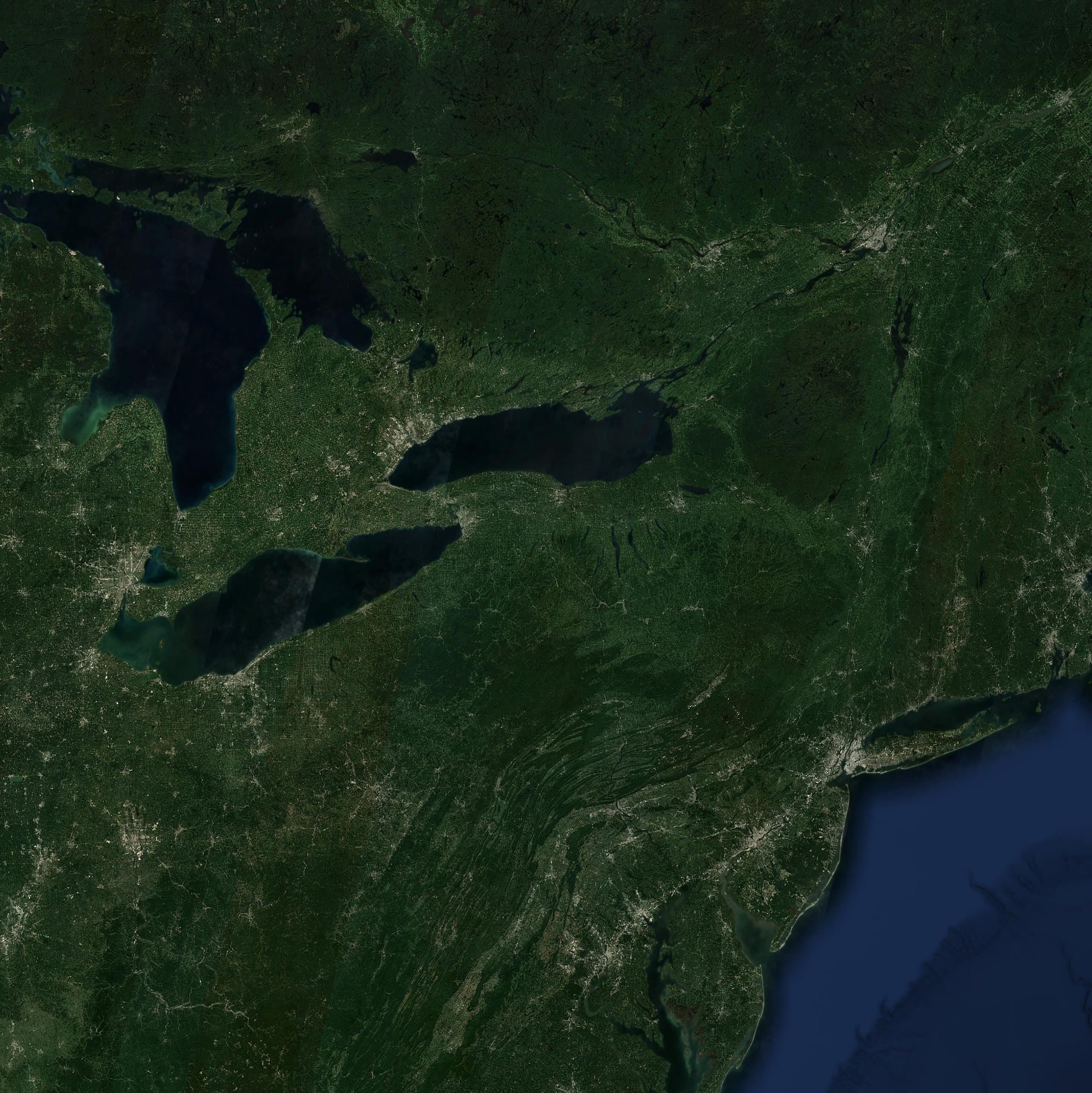
United States
New York
United States wine regions
About New York
United States wine regions
AVAs
What New York produces
White
Riesling is the state's flagship white, especially from the Finger Lakes; Chardonnay and Sauvignon Blanc on Long Island; Gewürztraminer and Pinot Gris in cooler pockets.
Red
Cabernet Franc thrives statewide; Bordeaux blends (Merlot-led) on Long Island; Pinot Noir in the Finger Lakes; cold-hardy hybrids in the Hudson and Champlain valleys.
Grapes of New York
What it tastes like
Body
Medium
Acidity
Bright
Tannin
Firm
Oak
A touch of oak
Ripeness
Fresh
Concentration
Medium
Reds
Mostly Cabernet Franc: always with firm tannin; fuller in Long Island, lighter in North Fork of Long Island.
Each appellation has its own style. Compare Long Island and North Fork of Long Island.
All 11 appellations
The shape averages its 11 appellations.
Body
Lightish
Acidity
Zippy
Oak
No oak
Ripeness
Fresh
Concentration
Medium
Whites
Mostly Riesling: always on the lighter side; brighter in Finger Lakes, rounder in Long Island.
Each appellation has its own style. Compare Finger Lakes and Long Island.
All 11 appellations
The shape averages its 11 appellations.
Climate
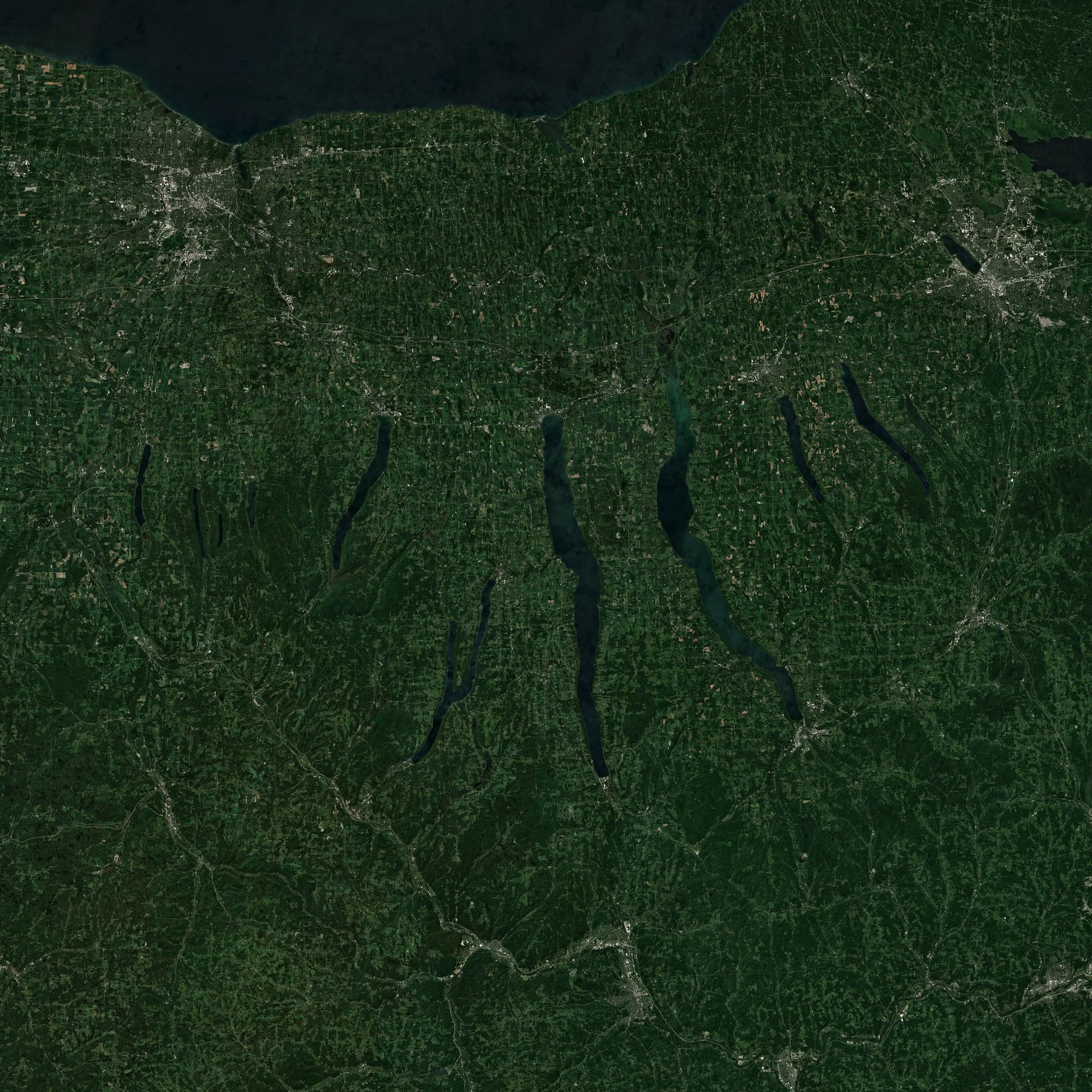
Three climate zones: maritime on Long Island (warmer, longer season, frost-protected by ocean); lake-moderated in the Finger Lakes and along Niagara/Erie (deep glacial lakes buffer winter cold and extend autumn); continental in the Hudson Valley and Champlain (cold winters, shorter season, strong diurnal swings). Climate change has noticeably extended the ripening window across all zones in the last two decades.
Terroir
Glacial geology dominates: deep glacial lakes carved by the last Ice Age (Finger Lakes, Lake Erie, Lake Ontario) provide thermal mass; the soils above their slopes are predominantly shale, limestone and slate (Finger Lakes), gravelly moraine and sand (Long Island), and Hudson Highlands schist and slate. The Niagara Escarpment continues the limestone ridge that defines Ontario's Niagara Peninsula across the border.
More in United States
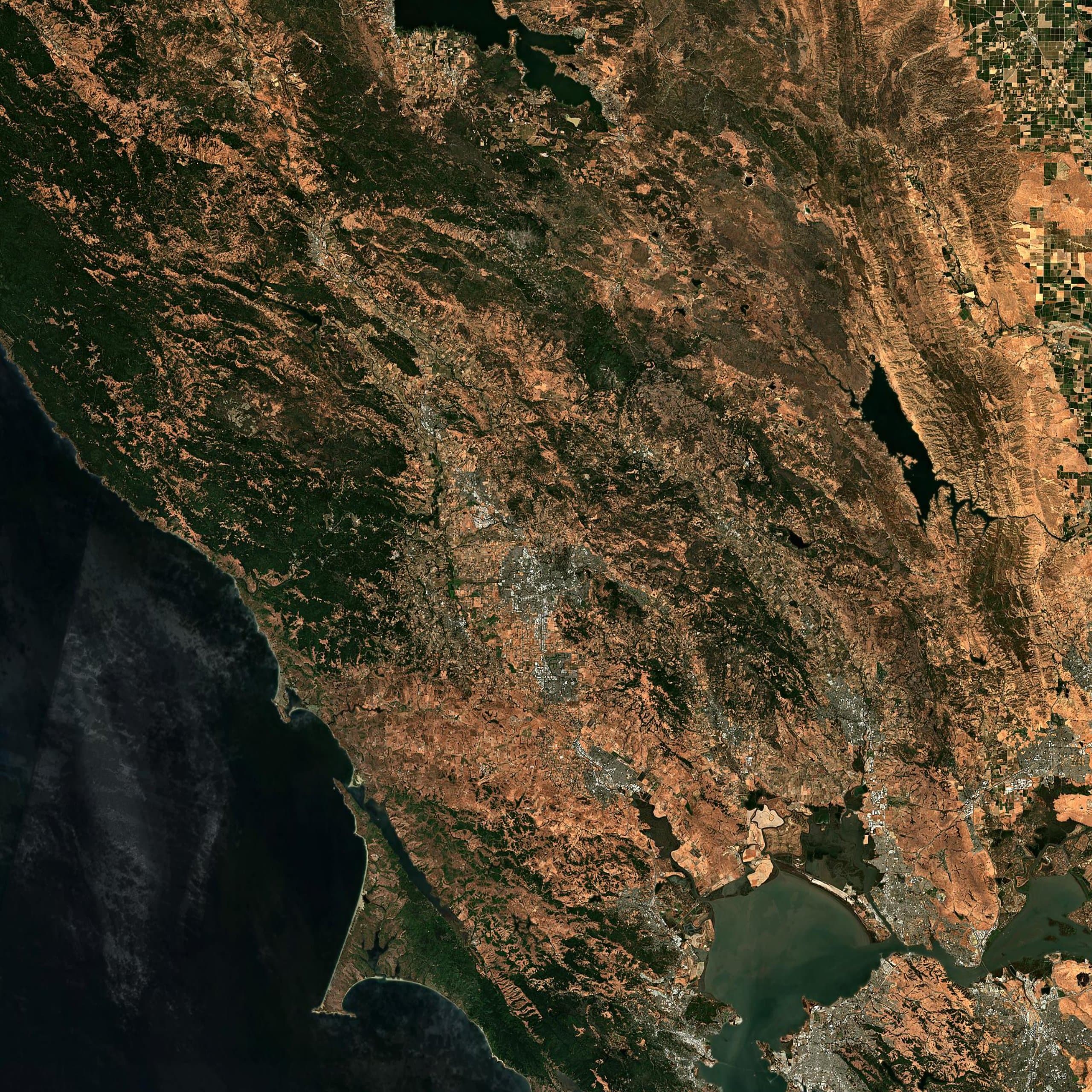
Map data: TTB (Alcohol and Tobacco Tax and Trade Bureau, US Treasury) AVA boundaries · Locality markers from OpenStreetMap (ODbL)