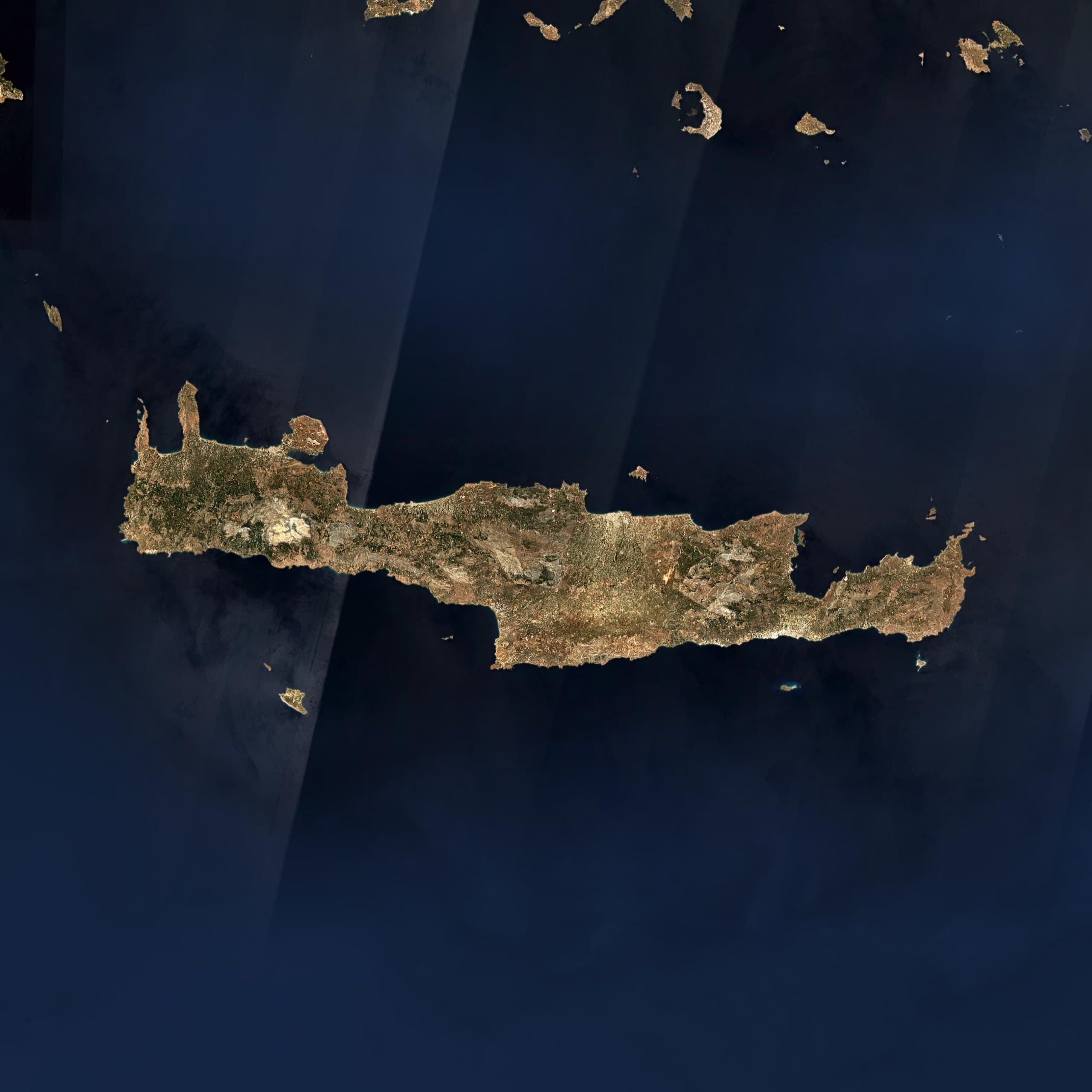
Crete
Greece
Greece wine regions
About Crete
Crete is the southernmost wine region in Europe and one of the oldest, with continuous viticulture documented for more than four thousand years. Seven PDOs structure the central and eastern parts of the island: Archanes, Dafnes and Peza in the hills above Heraklion are anchored by the local Kotsifali and Mandilari (red) and Vilana (white); Handakas-Candia is a younger PDO covering a wider Heraklion zone (with a Malvasia variant); Sitia at the island's eastern tip works with Liatiko and Vidiano; and Malvasia Sitia and Malvasia Handakas-Candia revive the medieval sweet-wine trade. PGI Crete covers the wider island, with prefecture-level PGIs for Chania, Iraklio, Lasithi and Rethimno. The Mediterranean climate is hotter than mainland Greece, mitigated by altitude (most serious vineyards sit 400-700 m) and the cooling Etesian winds. Producers like Lyrarakis (which has done more than anyone to rescue grapes like Plyto, Dafni, Melissaki and Vidiano), Domaine Economou, Manousakis and Diamantakis lead the modern Cretan scene.
Greece wine regions
PDOs & PGIs
Loading map...
Terroir & Character
Climate
MediterraneanHot summersAltitude reliefEtesian windsLong growing season
Terroir
LimestoneClayMarlSchistCoastal terraces
Frequently Asked Questions
What makes Cretan wine different?▼
Crete is the southernmost wine region in Europe and one of the oldest, with continuous viticulture documented for over four thousand years. The Mediterranean climate is hotter than mainland Greece, mitigated by altitude (most serious vineyards sit between 400 and 700 metres) and the cooling Etesian winds off the Aegean. The island's deep library of indigenous grapes (Vidiano, Vilana, Liatiko, Kotsifali, Mandilari, Plyto, Dafni) gives Cretan wine a flavour vocabulary you do not find anywhere else.
What are Crete's most important PDOs?▼
Seven PDOs cover the central and eastern parts of the island. Archanes, Dafnes and Peza in the hills above Heraklion are anchored by Kotsifali and Mandilari (red) and Vilana (white). Handakas-Candia covers a wider Heraklion zone (and has a Malvasia variant). Sitia at the eastern tip works with Liatiko and Vidiano. Malvasia Sitia and Malvasia Handakas-Candia revive the medieval Malvasia trade.
Which Cretan grapes should I try?▼
Vidiano for whites: stone fruit, herbs, real texture, ageing potential. Liatiko for reds: bright, perfumed, food-friendly, often compared to Pinot Noir in style. Vilana for crisp coastal whites. Mandilari for darker structured reds. Lyrarakis has done more than anyone to rescue obscure natives like Plyto, Dafni and Melissaki, and their bottlings are the easiest way to taste the breadth of Cretan vineyard diversity.
Who are the producers leading the Cretan revival?▼
Lyrarakis (the most diverse range, with a deep commitment to indigenous grapes), Domaine Economou (Sitia, old-vine Liatiko and traditional methods), Manousakis (Chania, Mediterranean blends), Diamantakis (Heraklion, ageable Vidiano), Lavoura, Idaia and Strataridakis (Chania, biodynamic). The island's modern wine story is roughly twenty years old and accelerating.
Where does Cretan wine sit in the international market?▼
Still under the radar, but moving. Top Vidiano and Liatiko bottlings now appear on serious wine lists in London, New York and Tokyo, and prices are still well below what comparable wines from better-known regions would cost. A small, generous corner of the export market for anyone willing to do a little homework.
Map data: Wines of Greece (ΕΔΟΑΟ, PDO/PGI register) · EU eAmbrosia · Administrative boundaries © OpenStreetMap contributors (ODbL)