CorkCork
País Vasco

Spain

País Vasco

RiojaRiojaRibera del DueroRibera del DueroRías BaixasRías BaixasPrioratPrioratMontsantMontsantPenedèsPenedèsNavarraNavarraJerezJerezJumillaJumillaValenciaValenciaMallorcaMallorcaRuedaRuedaToroToroBierzoBierzoRibeira SacraRibeira SacraValdeorrasValdeorrasRibeiroRibeiroMonterreiMonterreiMontilla-MorilesMontilla-MorilesVinos de MadridVinos de MadridAlicanteAlicanteCosters del SegreCosters del SegreSomontanoSomontanoMálagaMálagaPaís VascoPaís Vasco

Spain wine regions

About País Vasco

In the Basque Country, wine arrives with a little theatre. The bartender lifts the bottle high and pours a thin stream into a wide glass, waking up the faint natural spritz of txakoli, the bright, low-alcohol white that fuels every pintxo crawl through San Sebastián's old town. Most of it comes from green slopes above the Cantabrian Sea around the fishing port of Getaria, home of Getariako Txakolina, with Bizkaiko Txakolina and Arabako Txakolina adding their own takes in the hills toward Bilbao and the Ayala valley. Almost everything is Hondarrabi Zuri: lemony, saline and made to be enjoyed young with friends. The Basque vineyards of Rioja Alavesa, further south, belong to Cork's Rioja region.

Vintages

6 · 2020–2025

Rating:
95+
90-94
85-89
80-84
<80
PeakReadyHold
Early read, not out yet
Partly out
Year202520242023202220212020
White

Outstanding País Vasco Vintages

The best recent vintages rated excellent or exceptional.

White

2021

Past window
91Excellent

Textbook txakoli: around 11 percent alcohol, lively, well-balanced acidity and clean citrus fruit from healthy grapes.

2022Peak 2022–20232024

2020

Past window
90Excellent

A sunny, generous year: riper and rounder than usual, with more fruit and body while keeping the brisk acidity that makes txakoli sing.

2021Peak 2021–20222023

The Txakoli DOs

Classification System

Spain's wine-quality pyramid, administered under the EU Protected Designation of Origin (DOP) framework. The two top legal tiers — DOCa and DOQ — have only been awarded to two regions in the country. Every wine DO in Spain sits somewhere on this ladder.

DOCa / DOQ

Denominación de Origen Calificada (Castilian) / Denominació d'Origen Qualificada (Catalan). Spain's highest wine classification — awarded only to Rioja (1991) and Priorat (2009)

DO

Denominación de Origen — the main quality tier. Most Spanish wine regions (Bierzo, Rueda, Ribera del Duero, Rías Baixas, etc.) are DOs

Vinos de Pago (VP)

Single-estate designation for exceptional individual vineyards, outside the regional DO system. Currently around 20 properties nationwide (Dominio de Valdepusa, Pago de Otazu, etc.)

VC / Vino de Calidad

Vino de Calidad con Indicación Geográfica — a stepping-stone tier below DO, used by emerging regions building a track record toward full DO status

VT / Vino de la Tierra

Protected Geographical Indication (IGP) — a broader regional tier. Equivalent to France's IGP / Italy's IGT

Vino (without GI)

Basic table wine without a geographic designation

What País Vasco produces

White

The heart of txakoli: about nine in ten glasses are white Hondarrabi Zuri, around 11 percent alcohol, lemony and saline, often with a faint natural spritz kept from fermentation. Barrel-fermented and aged Berezia versions add depth.

Rosé

Bright, tangy rosado from Hondarrabi Beltza, pink to fuchsia in the glass, now about a tenth of Getaria's output and a summer favourite on the coast.

Red

A tiny category of light, crunchy Hondarrabi Beltza with a green-pepper and wild-berry edge, sometimes with a little prickle.

Sparkling

A small but growing crop of traditional-method and ancestral sparkling txakoli, white and rosé, sold under the Getaria and Bizkaia names.

Grapes of País Vasco

Climate

AtlanticMaritimeCoolVery wetHumidMild winters

Atlantic and very wet. Getaria's Pliego records around 1,600 mm of rain spread over some 185 days a year, and Bizkaia's around 1,200 mm with humidity averaging 82 percent. The sea keeps things mild, with an average near 13°C and spring frost almost unknown on the coast, but cloud cover keeps sunshine scarce. What saves the harvest is September: warm, dry southerly winds tumbling off the mountains, a foehn effect, often give the grapes their final push. The inland Ayala valley in Álava is a little drier and fresher.

Terroir

FlyschLimestoneSandstoneMarlClay loamSteep slopes

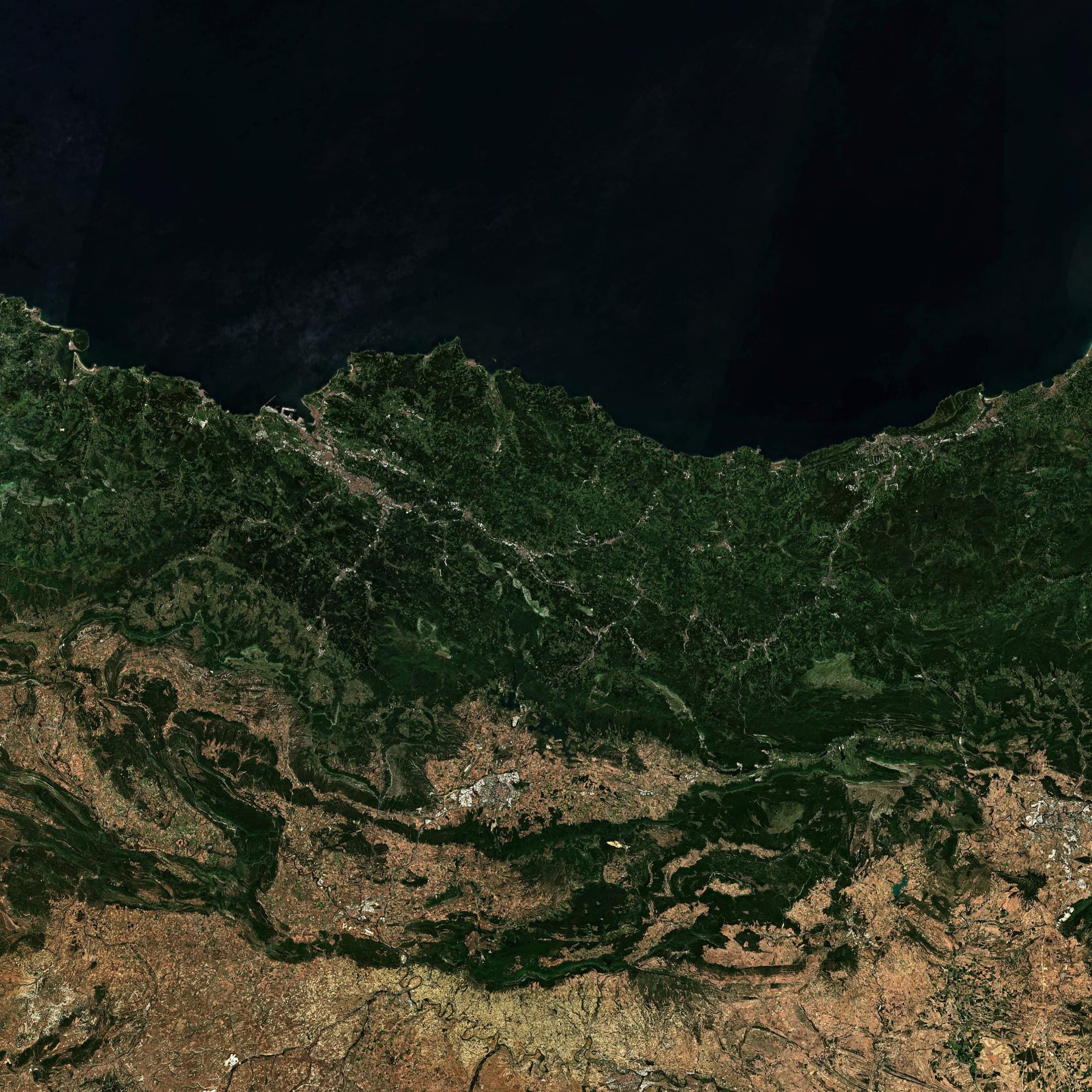
Rolling green hills squeezed between the Cantabrian Sea and the mountains, where vineyards are small parcels on slopes of around 15 to 20 percent, turned away from the cold northwest wind. Around Getaria the bedrock alternates hard limestone and sandstone with soft marls and clays, the same layered flysch that forms the cliffs along this coast, weathering into neutral clay loams rich in organic matter. Most Getaria vineyards are coastal and sit below 100 metres. Vines are traditionally trained high on pergolas, called parral, so the bunches hang in the breeze, well away from the damp ground.

Typical Aromas

green applelemonlime zestwhite flowersfresh herbssea spray
Explore the aroma wheel

More in Spain

Frequently Asked Questions

What is txakoli?▼
Txakoli (also spelled txakolina or chacolí) is the wine of the Basque Country: a light, bone-dry white, usually around 11 percent alcohol, with bright lemon and green-apple fruit, a saline edge and often a faint natural spritz kept from fermentation. It comes from three small DOs, Getariako Txakolina in Gipuzkoa, Bizkaiko Txakolina in Bizkaia and Arabako Txakolina in the Ayala valley of Álava, and it is made to be enjoyed young, usually within a year or two of the harvest.
Why is txakoli poured from a height?▼
In Basque bars the bottle is lifted high and the wine poured in a thin stream into a wide tumbler. The splash wakes up the wine's gentle spritz and lifts its aromas, so the first sip feels livelier. Only a small amount goes in each time, which is part of the ritual: you finish it while it is still sparkling and someone pours again. It is the classic sight in the pintxo bars of San Sebastián.
What grapes are used to make txakoli?▼
Hondarrabi Zuri makes almost all of it, and in Getaria it covers nearly the whole vineyard. Its red partner Hondarrabi Beltza gives the rosado and the rare reds. The rules also allow Hondarrabi Zuri Zerratia (Petit Courbu), Gros and Petit Manseng (locally Izkiriota), Riesling and Chardonnay, and in Bizkaia Folle Blanche (Mune Mahatsa) as well, but most of these are capped at a fifth of what each winery processes, so the local grapes keep the lead.
What is the difference between Getariako, Bizkaiko and Arabako Txakolina?▼
Getariako Txakolina, recognised in 1989, is the original and the biggest, with 479 hectares and 31 wineries across Gipuzkoa, mostly on coastal slopes around Getaria, Zarautz and Aia. Its wines are the classic fresh, spritzy style. Bizkaiko Txakolina, from 1994, covers the whole of Bizkaia and has the broadest range, including aged Berezia wines and more grape choice. Arabako Txakolina, from 2001, is the smallest, around 100 hectares in five municipalities of the Ayala valley, and a little rounder from its drier inland setting.
What food goes well with txakoli?▼
Anything from the Cantabrian Sea. Txakoli is the natural partner for Getaria anchovies, gilda pintxos of olive, anchovy and pickled pepper, grilled sardines and the whole turbot cooked over coals in Getaria's waterfront grills. It also loves bacalao al pil-pil, stuffed crab and simple seafood rice. The rosado is lovely with charcuterie and summer salads, and both make a cheerful aperitif for an evening with friends.

Map data: Txakoli DO zones from the official pliego municipio lists · Municipality boundaries © OpenStreetMap contributors (ODbL)