
Country
South Africa
Chenin Blanc, old vines, and two oceans
The oldest of the new wine countries, and the newest of the old. South Africa grows vines on some of the most ancient soils in the winegrowing world, between a cold Atlantic current and a warm Indian Ocean, and since 1994 it has turned three and a half centuries of history into wine's most compelling second act.
~88,000 ha
Under vine
2 February 1659
First Cape wine
Chenin Blanc (~18%)
Most planted
1925
Pinotage born
Since 1973
Wine of Origin
Vines 35+ years
Heritage vineyard seal
The country
Why South Africa matters
On 2 February 1659 Jan van Riebeeck wrote in his diary: "Today, praise be to God, wine was made for the first time from Cape grapes." Within a century Constantia's sweet wine was pouring at Europe's courts, ordered by Napoleon in exile and praised in Jane Austen's pages. No wine country outside Europe has a deeper past.
Then came a long detour. The KWV cooperative, founded in 1918, ran the industry on quotas and minimum prices for most of a century, and apartheid-era sanctions closed the world's markets. When democracy arrived in 1994 and exports reopened, a new generation inherited old bush vines, ancient soils, and everything still to prove.
They have been proving it since: Swartland's old-vine Chenin and Syrah, Stellenbosch Cabernet, Hemel-en-Aarde Pinot Noir, and a revived Vin de Constance pouring again after a century of silence.
What grows here
The signature grapes
The varieties that define South Africa. Tap any card to drill into the grape's profile.
The land
Terroir at a glance
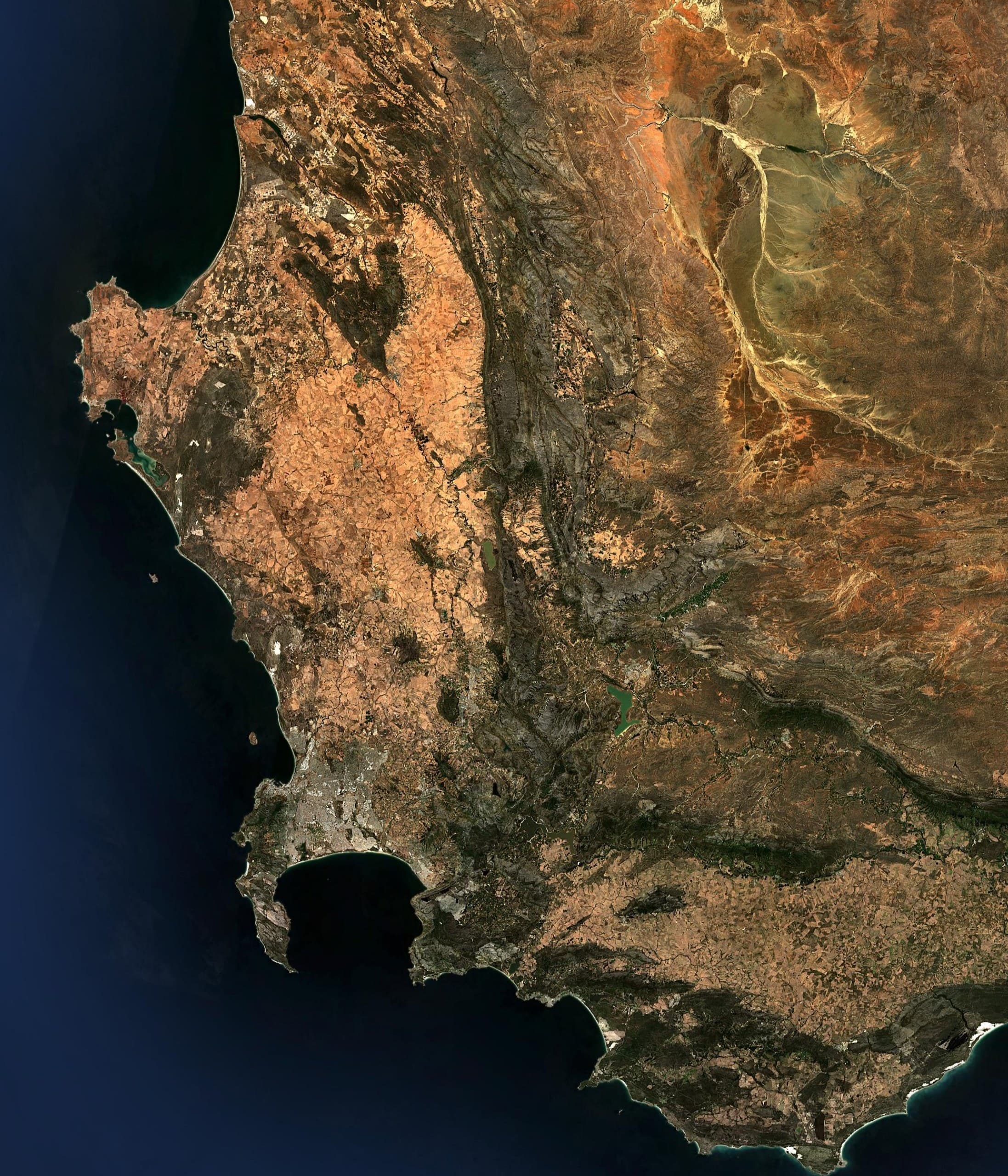
A mountainous cape at the meeting point of two oceans. The vineyards of the Western Cape grow on soils hundreds of millions of years old, cooled by an Antarctic current and scoured clean by a famous summer wind.
Soils older than almost anywhere
The Cape's three great parent rocks, granite, Table Mountain sandstone, and Malmesbury shale, are among the oldest in any winegrowing country, with granites over 500 million years old and shales older still. Stellenbosch and Paarl farm decomposed granite on the mountain slopes; the Swartland works shale and its own granite dome at the Paardeberg. Old rock, low vigour, long memories.
The Cape Doctor
Every summer a fierce southeasterly wind howls across the Cape, so reliably clearing the air of pests and disease that locals named it the Doctor. In the vineyards it dries the canopies after humid spells, thickens skins, and cuts yields, trading quantity for concentration. Many of the Cape's healthiest, least-sprayed vineyards owe their condition to it.
The Benguela current
A cold current sweeps up from the Southern Ocean along the Atlantic coast, chilling the sea air that drifts inland. It is why the south coast can do Burgundy at 34 degrees south: Walker Bay's Hemel-en-Aarde valley and the high orchard country of Elgin ripen Pinot Noir, Chardonnay, and Riesling slowly, with the acidity of far cooler latitudes.
Mountains and fynbos
The Cape Fold mountains crumple the winelands into amphitheatres and valleys, so a short drive crosses more aspects and altitudes than whole countries offer. Around the vines grows fynbos, the smallest and richest floral kingdom on earth, and tasters swear its wild herbal scrub finds its way into the glass as a savoury Cape signature.
On the map
The regions worth visiting
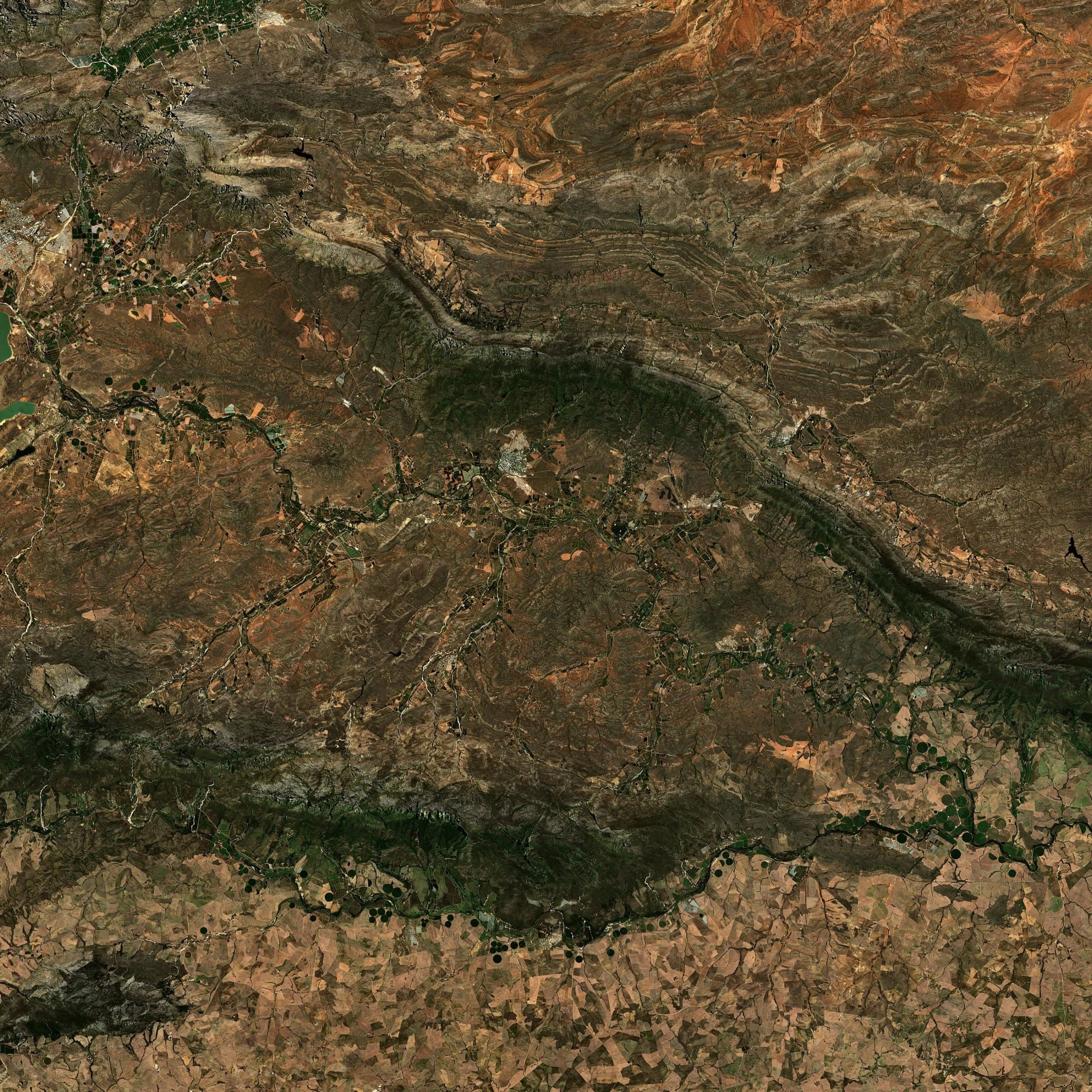
Only regions with mapped vineyards and full guides are shown. Each tile leads to its appellations and vintages.
South Africa wine regions. Select a region to learn more.
The Cape heartland
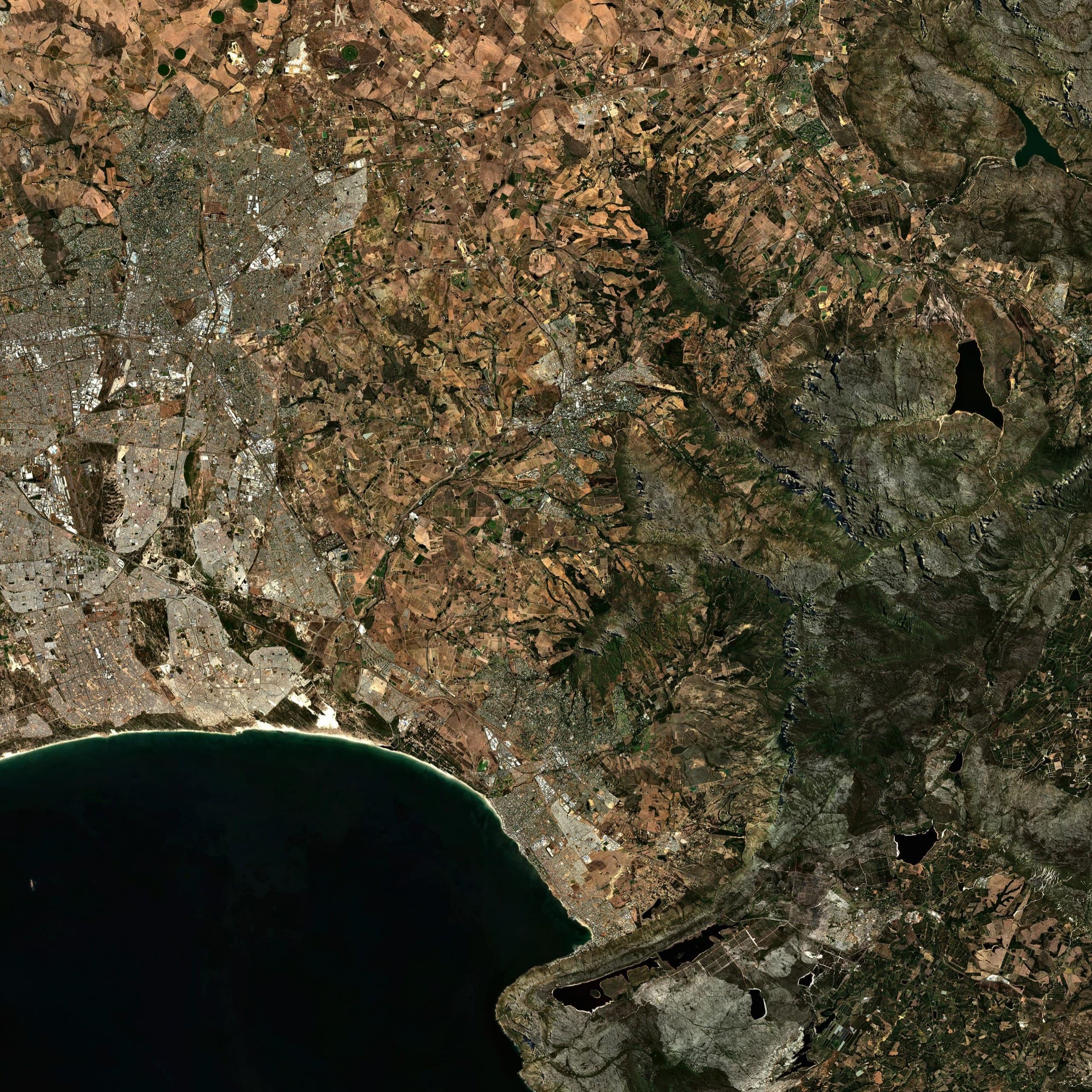
The historic core east of Cape Town. Stellenbosch is the Cape's Cabernet capital and its university town of wine, Paarl ripens generous reds and Rhône-style blends beneath one of the world's largest granite outcrops, and Franschhoek, settled by Huguenot refugees in 1688, pairs Cap Classique and old-vine Semillon with the country's best tables.
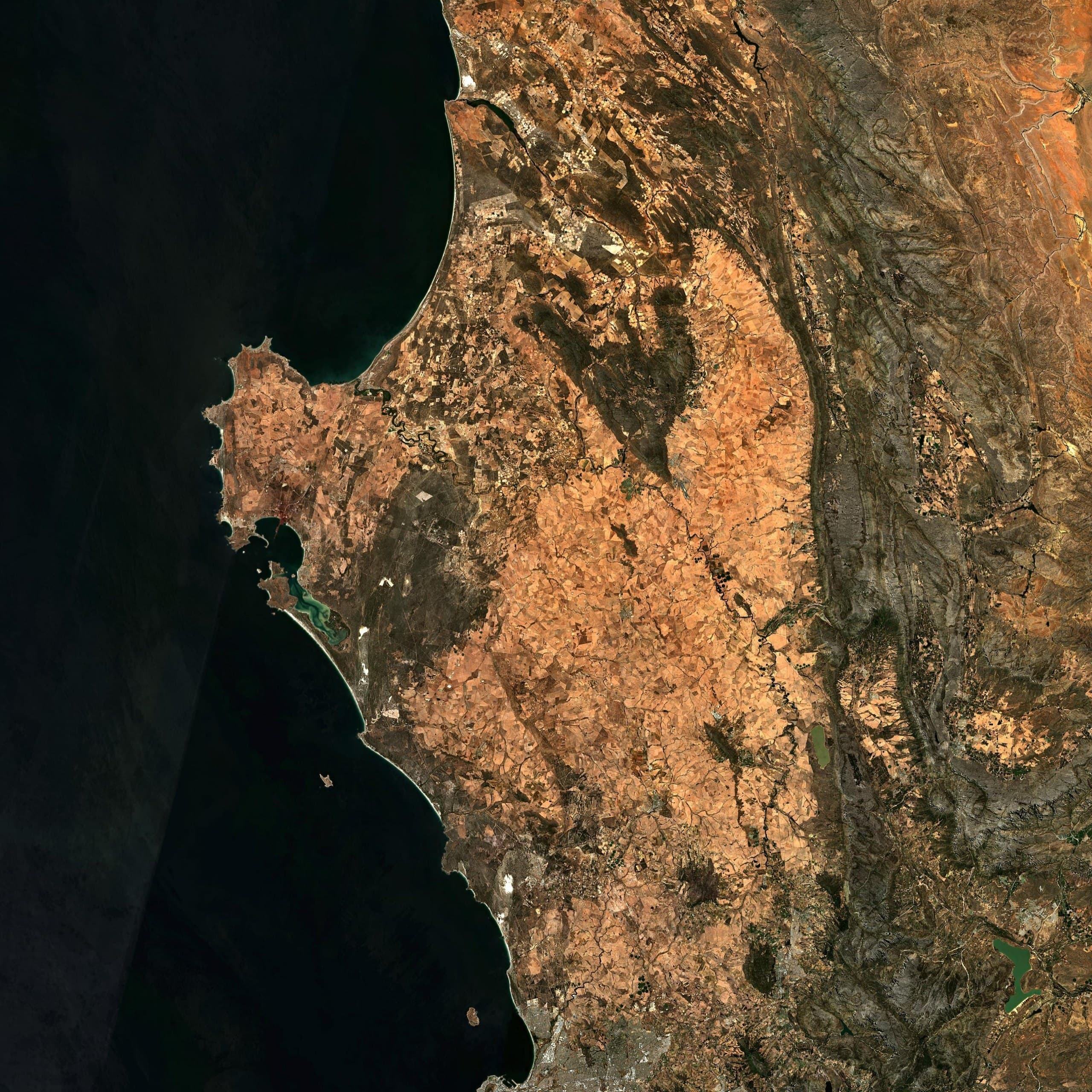
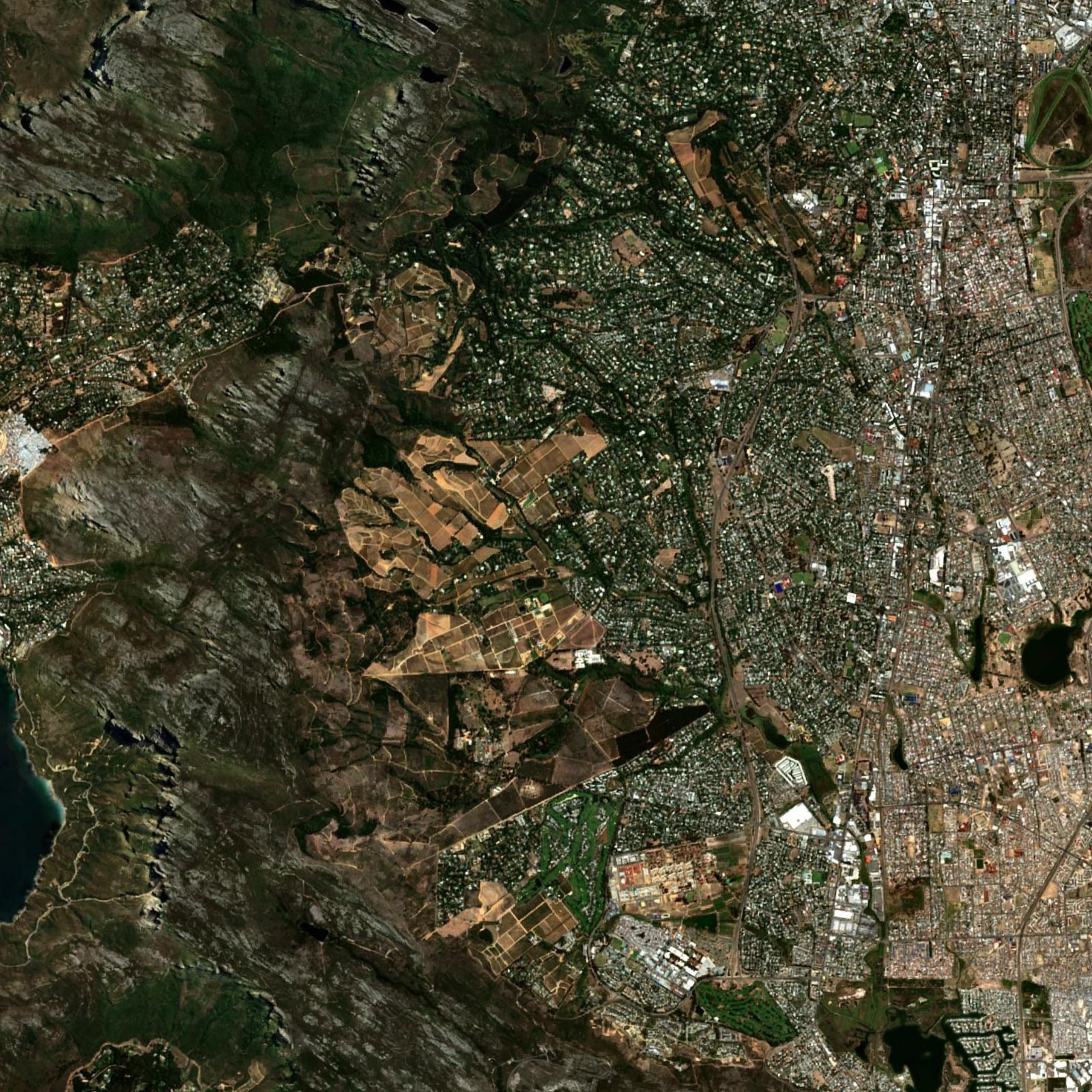
The Atlantic side
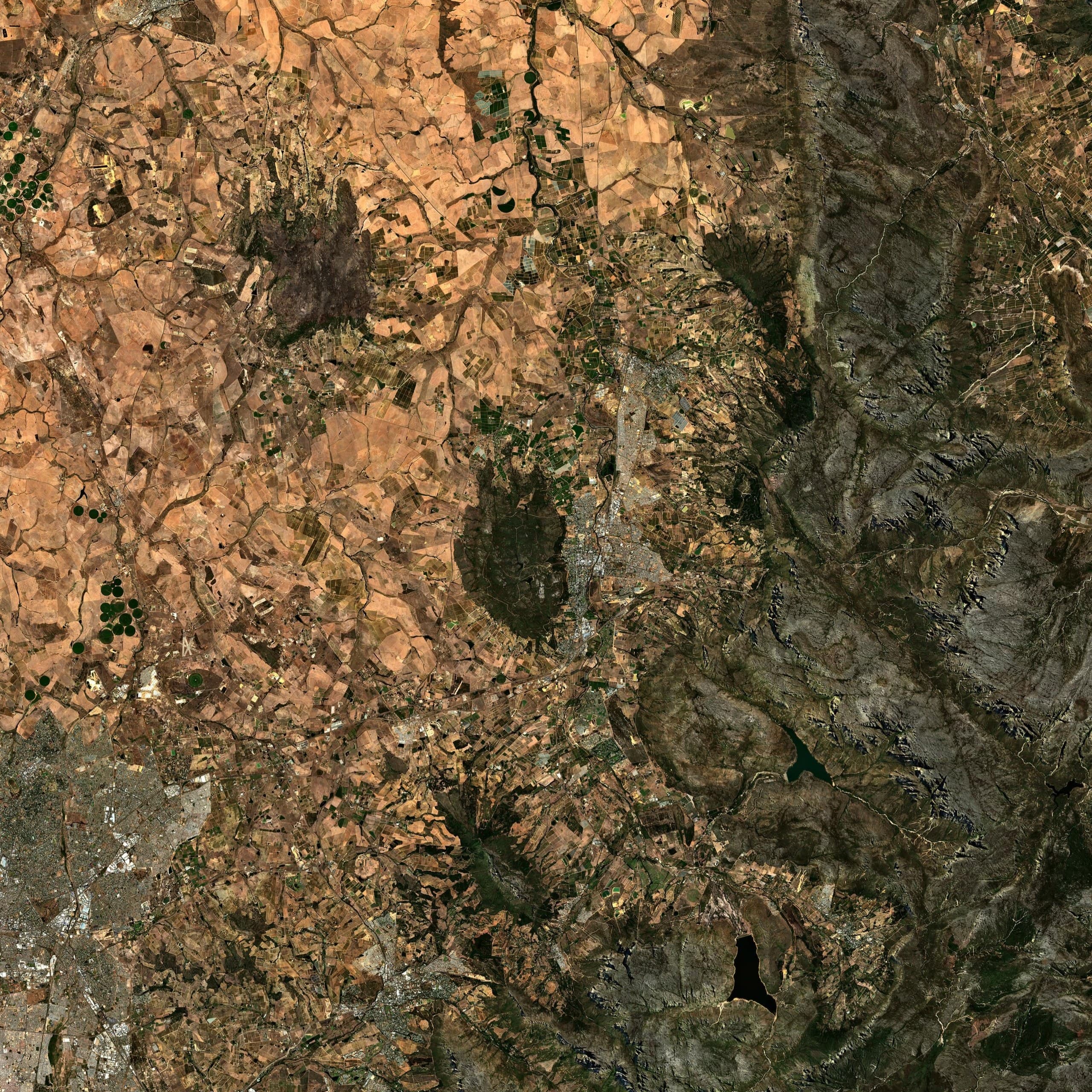
Old vines and old fame. The Swartland's dry-farmed bush vines on Malmesbury shale and Paardeberg granite sparked the revolution that remade South African wine. Constantia, on the cool back of Table Mountain, made the Cape famous in the 1700s and now sets racy Sauvignon Blanc beside the revived Vin de Constance.
The cool south coast
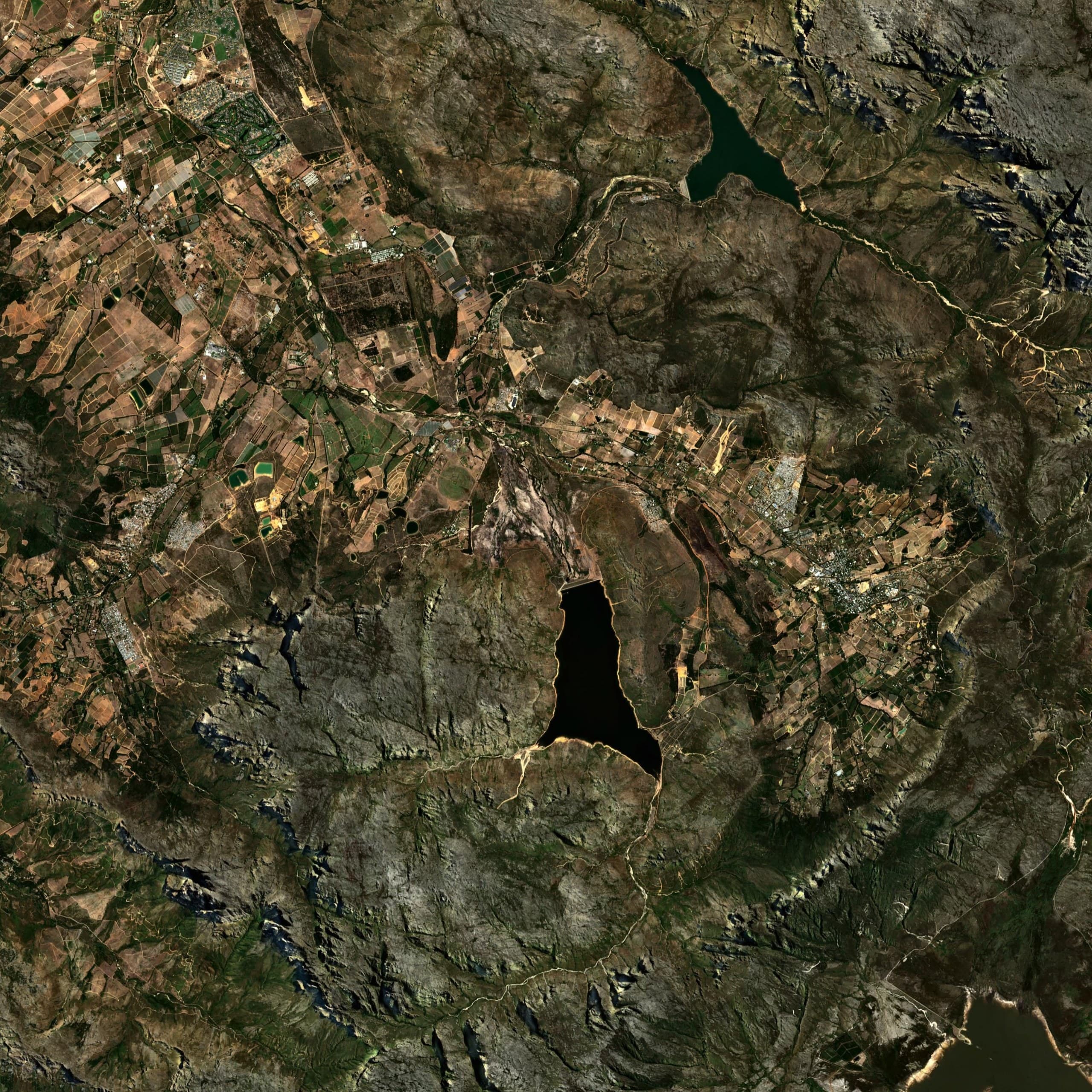
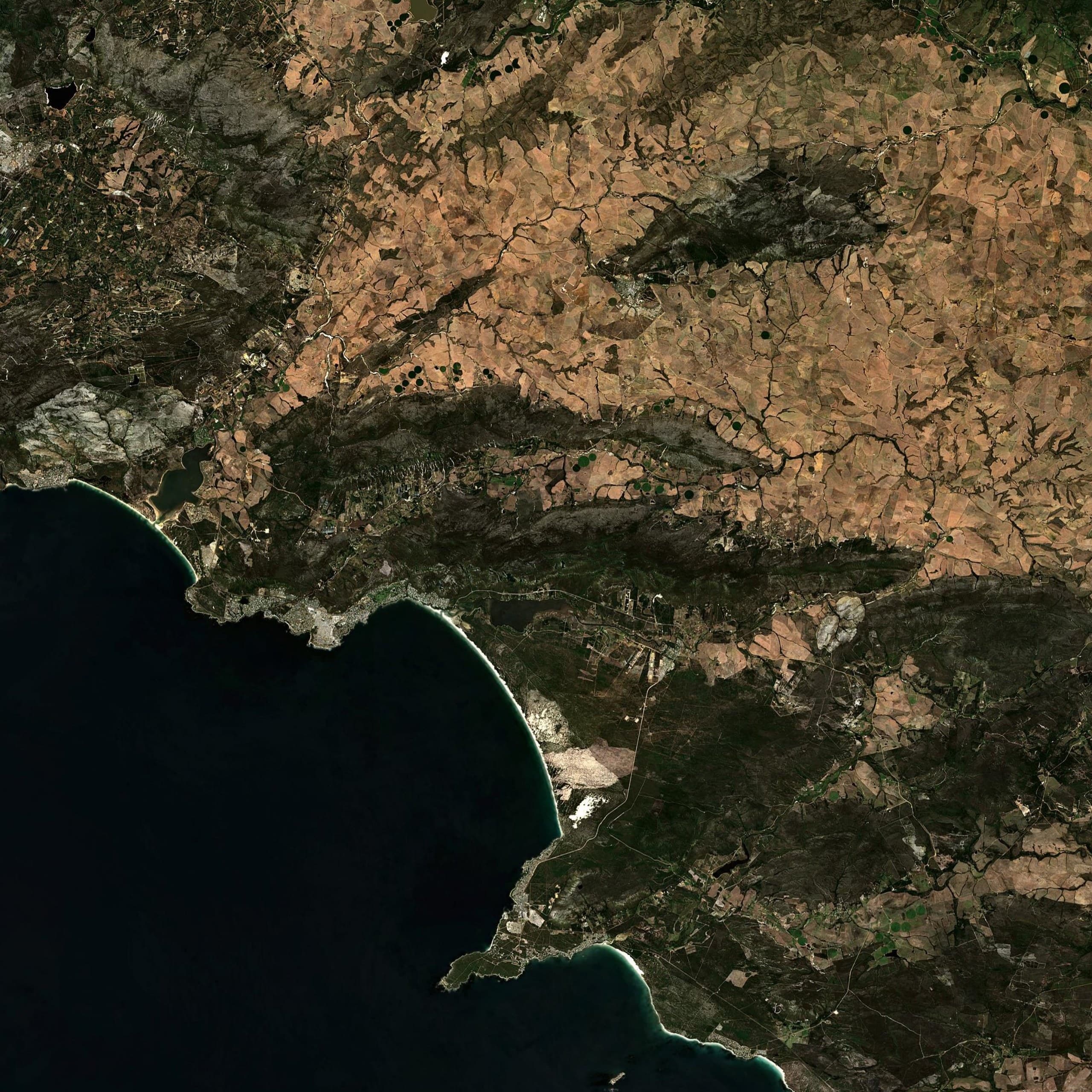
Benguela-chilled country where the Cape does Burgundy. Walker Bay's Hemel-en-Aarde valley grows clay-soiled Pinot Noir and Chardonnay behind the whale town of Hermanus, while Elgin's high apple-orchard plateau gives some of the country's tautest Chardonnay, Sauvignon Blanc, and Riesling.
Inland on the Breede
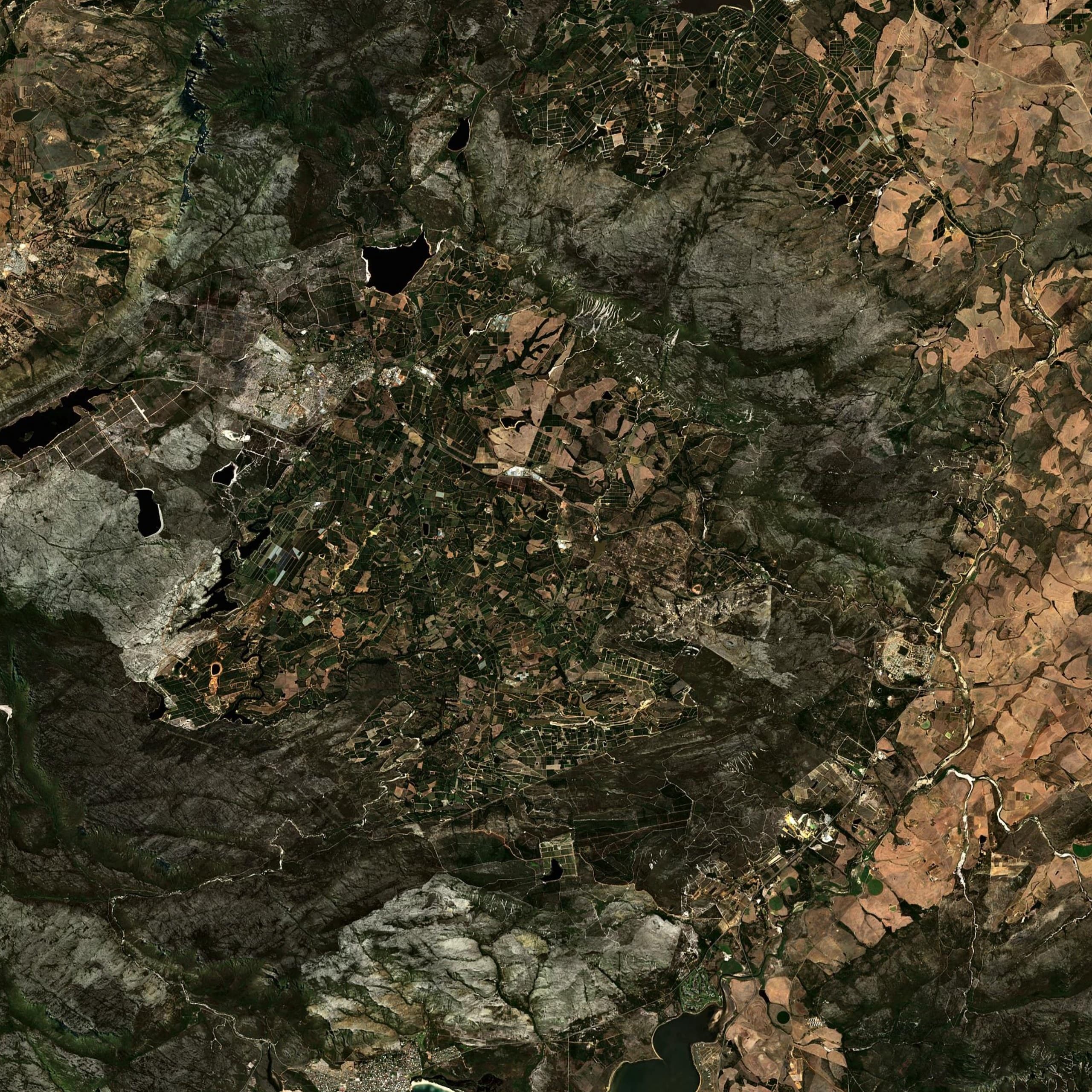
Lime-rich soils up the Breede River valley, warm by day and cooled at night by air drawn in from the south coast. Robertson calls itself the valley of wine and roses: tense Chardonnay, Graham Beck's Cap Classique, and ever more serious Shiraz.
The system
How wine is classified in South Africa
South Africa certifies origin more strictly than almost anyone. The Wine of Origin scheme, instituted in 1973 and now administered under the Liquor Products Act, backs every claim on the label with a numbered certification seal.
- 01
Wine of Origin (WO)
A nested map of geographical units, regions, districts, and wards: Western Cape at the broadest, down through the Coastal Region to a district like Stellenbosch or a ward like Constantia. Unusually, a WO claim requires 100 percent of the grapes from the named place, stricter than Europe's usual 85, while a stated vintage or variety each requires 85 percent.
- 02
Estate wine
A promise of unity rather than a place name. Estate wine must come from a registered unit of contiguous land farmed as a single whole, with the wine grown, made, and bottled on the property. The term certifies how a wine was produced, start to finish, not merely where its grapes grew.
- 03
Single vineyard and heritage seals
The finest print. A registered single vineyard may not exceed 6 hectares and must be planted to one variety, its name certified on the label. Since 2018 the Old Vine Project's Certified Heritage Vineyards seal adds a layer no other country offers: wines from vines 35 years or older may carry the seal with the vineyard's planting date, independently verified.
A tasting plan
Where to start
Start in Stellenbosch and the Swartland with the grapes South Africa calls its own, then follow the cool coastline south, and finish with the icons that bookend three and a half centuries of Cape wine.
Start here
Three wines that explain why the Cape is the most exciting value in the wine world right now.
Stellenbosch Cabernet Sauvignon
Stellenbosch · Cabernet Sauvignon
The Cape classic from decomposed granite slopes between two oceans' breezes. Cassis and cedar with a wild fynbos herbal edge and firm, dusty tannin. Kanonkop and the Simonsberg estates set the standard, and the value runs remarkably deep.
Old-vine Chenin Blanc
Swartland or Stellenbosch · Chenin Blanc
The national white from bush vines often older than their winemakers. Baked apple, quince, and honey over a firm line of acidity, with the texture only old roots give. Ken Forrester and the Swartland growers show why the world now looks to the Cape for Chenin.
Modern Pinotage
Stellenbosch · Pinotage
South Africa's own grape, bred in 1925 and now made with real polish: dark plum, mulberry, and sweet spice over supple tannin. Kanonkop has treated it seriously for decades, and Beyerskloof makes the friendly everyday version.
Go deeper
Head for the cool coast and the shale hills, where the Cape's new wave does its most distinctive work.
Hemel-en-Aarde Pinot Noir
Walker Bay · Pinot Noir
From a clay-and-shale valley behind the whale town of Hermanus, cooled by the cold Atlantic. Hamilton Russell planted the flag here in the 1970s; the Pinot is perfumed, savoury, and the Cape's clearest answer to Burgundy.
Swartland Syrah
Swartland · Syrah
Peppery, floral Syrah from dry-farmed vines on shale and granite, closer in spirit to the northern Rhône than to Barossa. Mullineux and Porseleinberg lead a region that went from bulk-wine obscurity to the country's most fashionable address within a decade.
Cap Classique from Robertson
Robertson · Chardonnay
The Cape's traditional-method sparkling wine, at its best off Robertson's lime-rich soils. Graham Beck's Brut poured at Nelson Mandela's inauguration celebrations in 1994. Lemon, brioche, and a fine mousse at a price Champagne cannot touch.
For the curious
The summit wines: a resurrected legend, the Swartland's founding icon, and Pinotage with nothing left to prove.
Vin de Constance
Constantia · Muscat de Frontignan
The sweet wine Napoleon ordered to his exile on St Helena and Jane Austen prescribed for a disappointed heart, revived by Klein Constantia in 1986 after a century of silence. Apricot, orange peel, and spice carried on bright acidity: one of the world's great sweet wines, again.
Sadie Family Columella
Swartland · Syrah
Eben Sadie's Syrah-led blend from old parcels scattered across the Swartland, first made in 2000 and the wine that announced the region's revolution. Layered, savoury, and built to age: the modern Cape's first icon.
Kanonkop Black Label Pinotage
Stellenbosch · Pinotage
From bush vines planted in 1953 on the Simonsberg foothills, this is the case for Pinotage as a great grape. Dense dark fruit, fine tannin, and decades ahead of it: proof that the Cape's own cross can stand with the world's best reds.
At the table
Wine and food in South Africa
The Cape table gathers around the braai and borrows its spice from Cape Malay kitchens: boerewors and lamb over the coals, fragrant bobotie, snoek off the Atlantic, and malva pudding to finish. The wines were made for it. Pinotage and Syrah belong at the fire, Chenin Blanc loves the gentle curry spice, and Vin de Constance meets dessert as it has for three centuries.
Frequently Asked Questions
What exactly is Pinotage?▼
Why is Chenin Blanc South Africa's flagship white?▼
How does the Wine of Origin scheme work?▼
What is the Old Vine Project?▼
What was Constantia's sweet wine, and is it back?▼
What happened to South African wine in the 20th century?▼
Which producers are the best guides to South Africa?▼
Keep exploring